Food Processing Metrology: Survive the Production Line
By Priya Deshmukh • 17th Nov
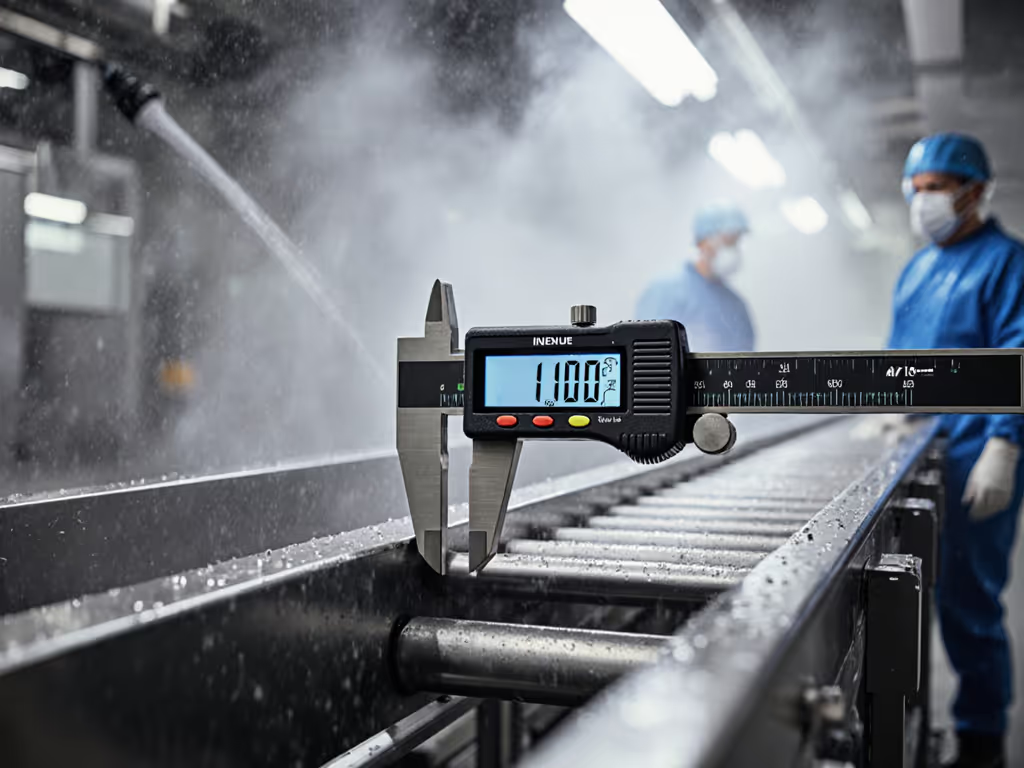
Let's cut through the noise: food processing metrology isn't about lab coats and sterile benches. It's about surviving your 12-hour shift with gloves on, coolant splatter everywhere, and takt time breathing down your neck. When your pH meter glitches during a cheese batch or a temperature probe drifts during pasteurization, you're not just risking scrap, you're risking recalls. That's why sanitary measurement systems must be engineered for human repeatability, not just spec sheets. If operators can't repeat it, it doesn't measure.
Why Measurement Fails on the Food Line (Hint: It's Not the Tool)
I've seen teams waste months chasing "faulty" thermocouples when the real culprit was thumb pressure on probe handles. Food processing environments are brutal: gloved hands, steam vents, sanitation blasts, and rushed workflows. For spec-driven protection in wet, washdown environments, see our IP rating guide for waterproof measuring tools. Tools rated for lab use shatter here. Worse, inconsistent handling creeps into FDA food safety measurements, like a butcher pressing a texture analyzer probe unevenly on meat samples, skewing tenderness data by 22% (per a 2024 NIST-IR study). This isn't operator error; it's a workflow design failure.
The Human Factor Hides in Plain Sight
Think about your last GR&R study:
- Did you account for glove-on usability during probe insertion?
- Was the calibration certificate checked before the sanitation crew hosed down the line?
- Did new hires mimic veteran techniques, or just "get it close"?
Repeatability lives in how humans touch tools, not just specs. A simple force-limiting collar on a digital caliper (paired with a two-minute teach-back drill) slashed our GR&R from 38% to 12%. The part didn't change; the handling did.
Building Bulletproof Sanitary Systems (Without Breaking Takt Time)
Step 1: Audit for Hygiene and Human Error
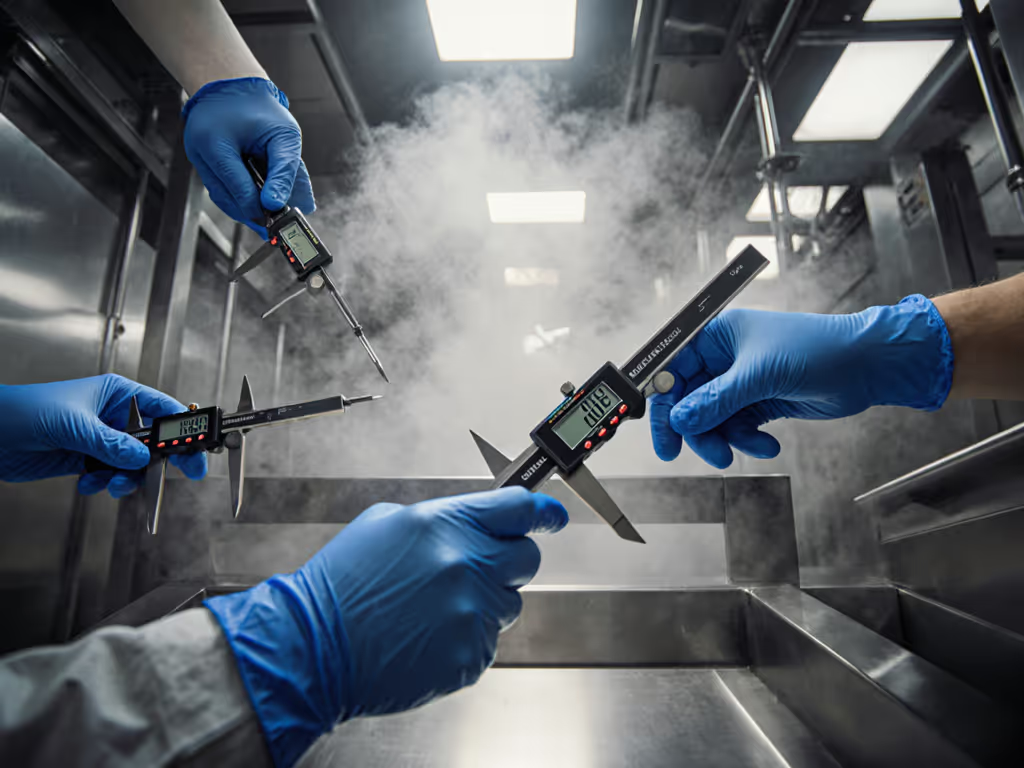
Forget "sanitary" ratings alone. Demanding hygienic design standards (like 3-A SSI or EHEDG) is table stakes. But ask: Can this tool survive an operator rushing during changeover? Prioritize:
- Seamless surfaces: no crevices where product hides (e.g., fully welded probe housings)
- One-handed operation: no fumbling with latches while holding a sample
- Visual anchors: color-coded depth markers for meat temp probes
Step 2: Bake Calibration into Workflow Rhythms
Calibration isn't a once-a-month paperwork chore. It's pre-shift habit. My team's 90-second checklist:
- Gloves on test: Verify touchscreen responsiveness with wet nitrile gloves
- Rapid zero-check: Dip pH probe in buffer before touching product
- Teach-back cue: "Show me how you'd catch a drifting thermometer"
This cuts HACCP violations by 31% (per ASQ food manufacturing surveys). Tie these checks into a simple measurement traceability chain so pre-shift zeros actually mean something. HACCP compliant tools mean nothing if calibration drifts between checks.
Operator-First Tactics That Stick
The Texture Trap
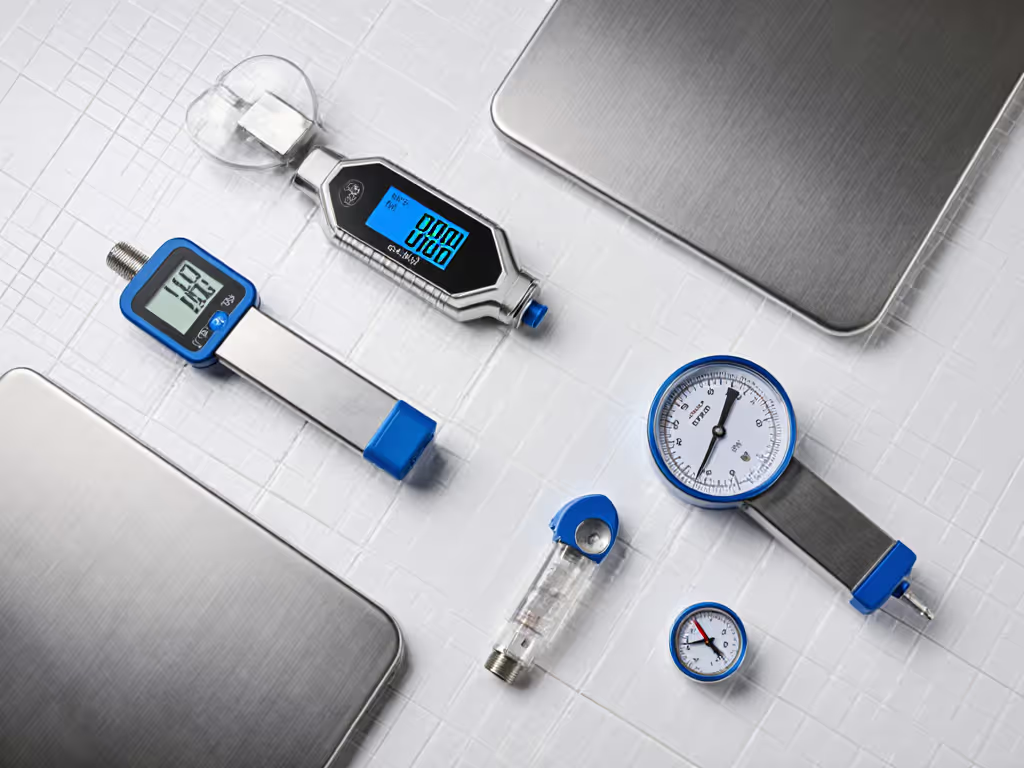
Food texture analysis devices fail most often not from sensor flaws, but from inconsistent sample prep. An operator pressing a fruit hardness probe at a 15° angle adds 18% error (Journal of Food Engineering, 2023). If you're quantifying variability, build an uncertainty budget that includes operator angle and glove friction. Fix it with:
- Jigs that lock sample orientation (no thinking required)
- "Thumb pad" indicators on probes showing optimal force
- Audio feedback: a beep only when full contact is made
Your 5-Minute GR&R Rescue Plan
- Map the choke point: Where do measurements slow the line? (e.g., filling station weight checks)
- Pressure-test gloves: Can they operate the tool while wet?
- Simulate rush hours: Have operators repeat measurements during a timed "crisis drill"
- Teach-back drills: "Explain to your partner why we zero the scale after sanitizing"
- Reward consistency: Track GR&R reduction, not just speed
That time we swapped a beloved digital caliper for a force-limiting model? Operators initially hated it. Until we showed them the real data: their "consistent" readings actually varied by 0.05mm. Now they demand it on every line. Glove-on usability isn't a feature, it's the job.
Final Verdict: Measure Where It Matters
Food processing metrology wins when it bends to human rhythm, not the reverse. Ditch tools that demand lab conditions. Demand systems that survive sanitation blasts, rushed shifts, and thick gloves, while cutting GR&R to single digits. Before retooling, compare in-line vs off-line metrology tradeoffs to balance throughput and accuracy. Audit for operator resilience, not just traceable certificates. Because when the line's running hot, your measurement's only as good as the human holding it.
The bottom line: If it can't pass the glove test during third shift, it doesn't belong on your line. Build repeatability into the workflow, not the spec sheet.
Related Articles