Solar Metrology Tools: Traceable Quality Control
By Marcus O’Neal • 4th Nov
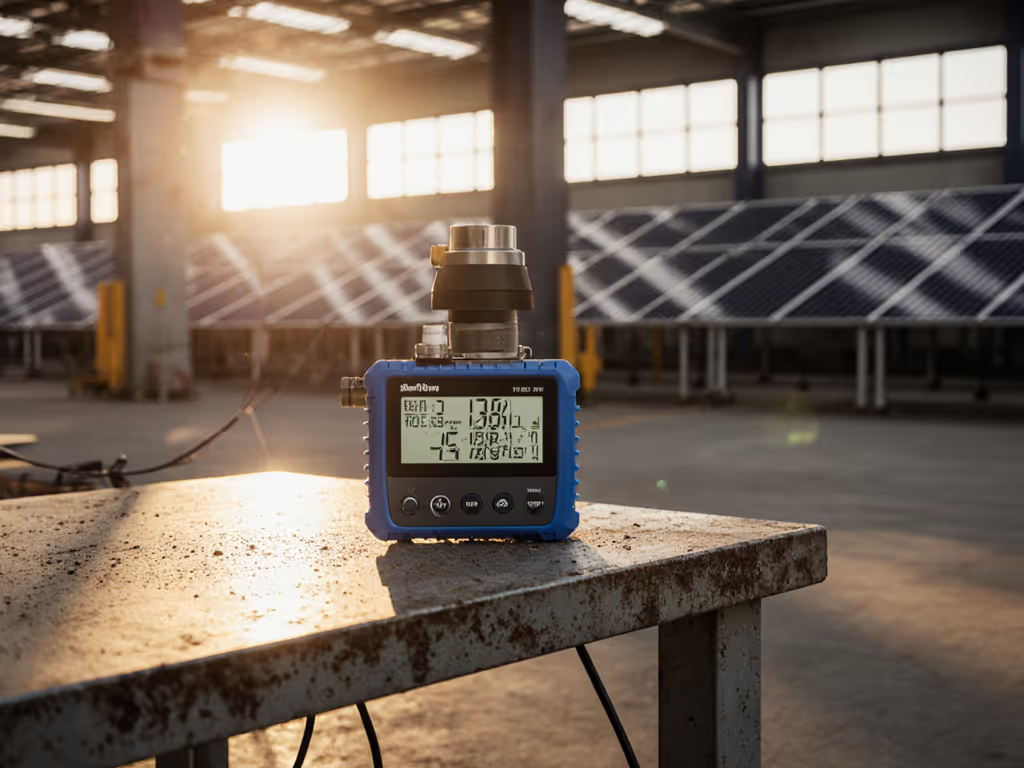
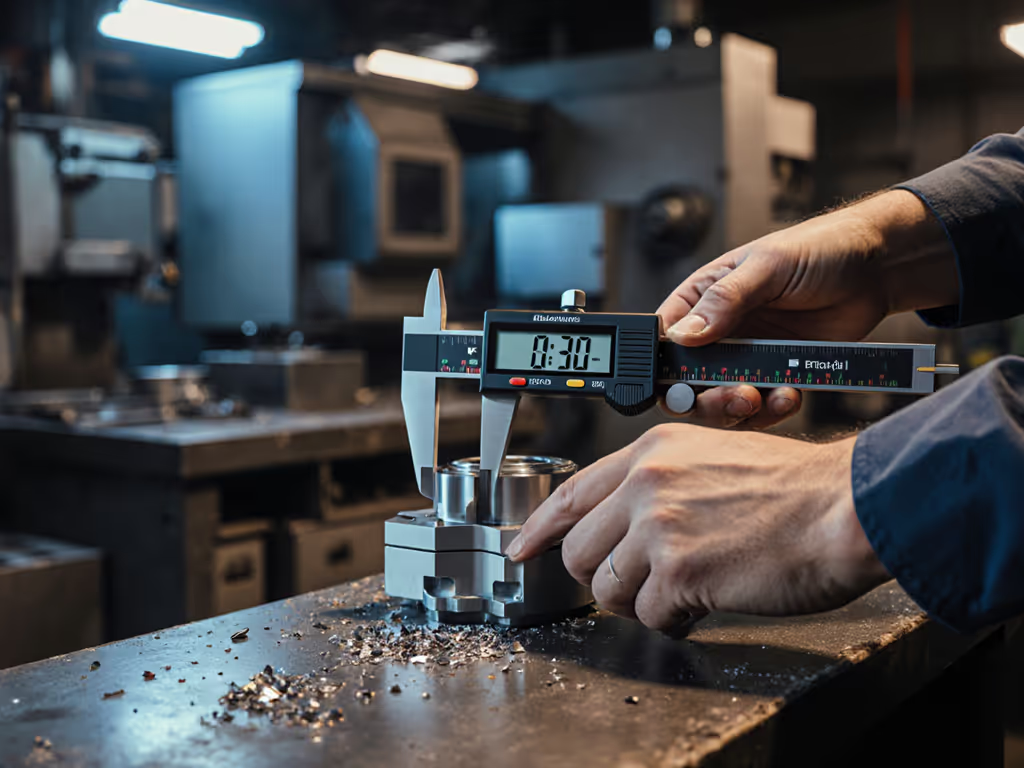
In solar manufacturing, solar panel metrology tools and photovoltaic measurement systems aren't just instruments, they are your first line of defense against costly scrap, audit failures, and efficiency shortfalls. When I worked in a Tier-1 PV fab, we treated traceability like oxygen: invisible until it was missing. Today's precision demands mean every micron of silicon wafer thickness measurement and anti-reflective coating verification must survive third-party scrutiny. This guide cuts through marketing fluff to show you exactly how to build audit-ready metrology chains (from R&D to production floor) that deliver measurable yield gains. Forget influencer hype; we'll focus on tools that earn trust when the auditor's pen hovers over your non-conformance report.
Why Traceability Matters More in Solar Than You Realize
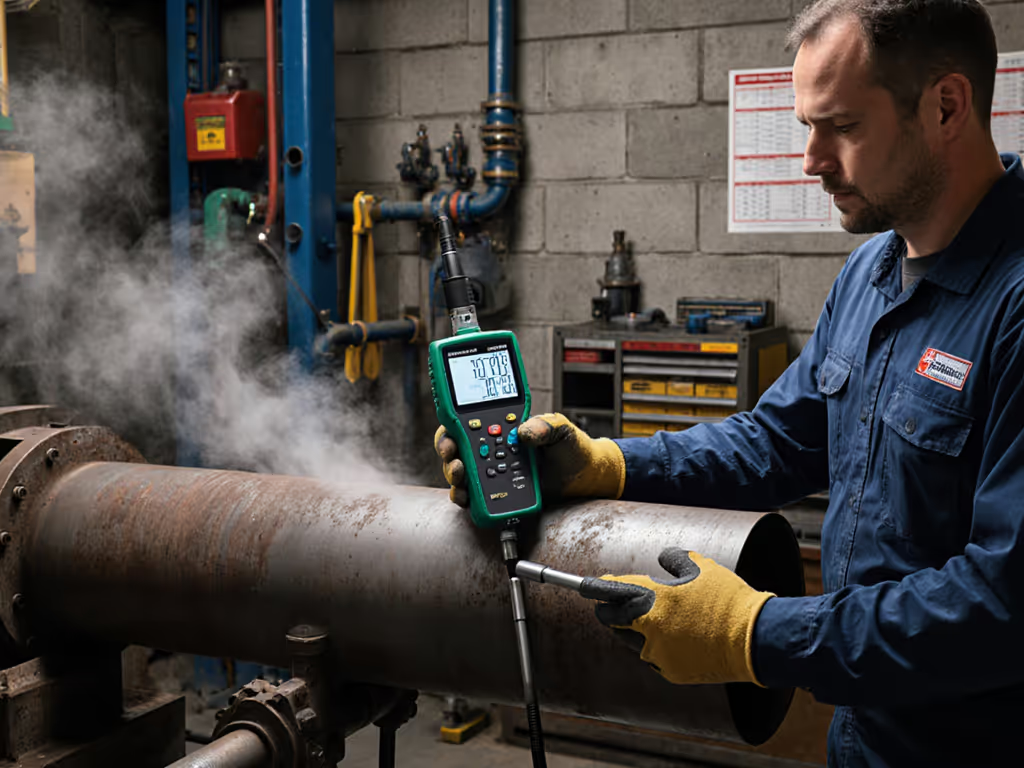
Solar manufacturing's unique pain point? Your product faces 25 years of environmental abuse, yet your metrology chain typically stops at the factory gate. For instruments used outdoors, understand IP ratings for harsh environments. I've seen teams pass ISO 9001 audits with pristine calibration certificates, only to fail field performance reviews because their pyranometer's calibration drifted 3% in desert heat. Traceability isn't paperwork; it's engineering insurance.
The Hidden Cost of 'Good Enough' Measurements
Consider these real-world consequences from audit reports I've reviewed:
- Silicon wafer thickness measurement errors >±5μm caused 12% cell breakage during lamination (cost: $220k/month in scrap)
- Anti-reflective coating verification skipped due to 'unavailable tools' led to 0.8% efficiency variance across panels, triggering warranty claims
- Solar panel alignment tools with unverified thermal coefficients caused tracker misalignment, losing 4.2% annual yield
Trace it, budget it, then trust it under audit. This isn't philosophy, it's how we survived a surprise NMI (National Metrology Institute) assessment last year.
Without rigorous uncertainty budgets, you're gambling on tolerances. A photovoltaic measurement system reporting '99.5% accuracy' means nothing if its temperature coefficient isn't documented or its calibration chain stops at a distributor's certificate.
Building Your Audit-Ready Metrology Chain: A Step-by-Step Framework
Step 1: Map Measurements to Critical Process Parameters
Don't start with tools, start with failure modes. Your solar cell efficiency testing protocol must link directly to:
- Critical-to-Quality (CTQ) parameters (e.g., wafer thickness tolerance ±10μm for 180μm cells)
- Environmental sensitivity (e.g., pyranometer drift >0.5%/°C above 35°C)
- Calibration hierarchy (e.g., reference cell traceable to NREL's Primary Reference Cell)
Use this checklist during tool selection:
| Parameter | Tool Requirement | Traceability Evidence Needed |
|---|---|---|
| Silicon wafer thickness | ±1μm accuracy at 25±2°C | Certificate showing NMI traceability |
| Solar cell efficiency | STC-compliant spectral mismatch <2% | Calibration against reference cell |
| Anti-reflective coating | Spectrophotometer with <0.1% reflectance error | NIST-traceable standards used |
Pro Tip: If the vendor can't provide the full calibration chain (instrument → reference standard → NMI), walk away. I once disqualified a $45k spectrometer because their 'traceable' certificate stopped at an unaccredited lab.
Step 2: Environmental Control as a Measurement Variable
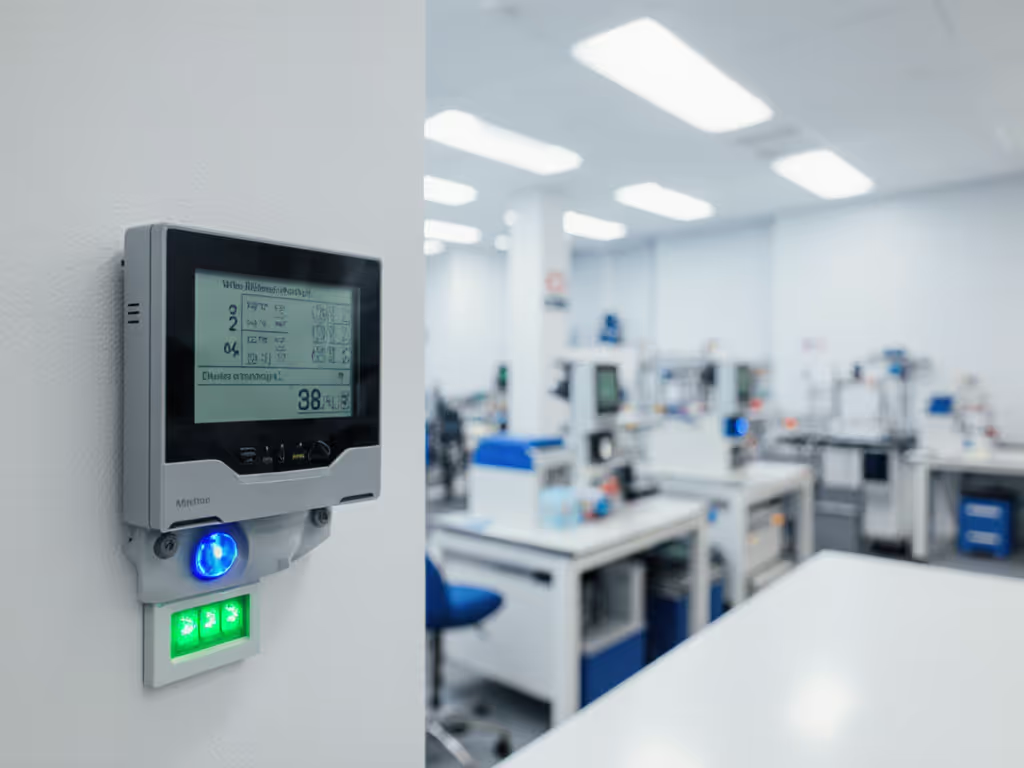
Your metrology lab's temperature isn't just comfort, it's part of your uncertainty budget. At 23°C, a micrometer may read true, but at 28°C in a desert fab? Its thermal expansion could add 3μm error. This is why I document environmental conditions with the same rigor as instrument calibration:
- Lab requirements for solar metrology:
- Temperature: 20±0.5°C (stabilized 24h before critical measurements)
- Humidity: 50±5% RH (critical for resistivity measurements)
- Vibration: <0.5μm/s RMS (ISO 230-2 compliant)
}
Remember my anecdote about the auditor requesting the thermometer calibration? Today, every environmental sensor in my lab carries:
- Unique asset ID
- Calibration certificate showing NMI traceability
- Uncertainty budget including drift since last calibration
This isn't bureaucracy, it's the difference between a 2-hour audit finding and a 2-day shutdown.
Step 3: Selecting Tools That Survive Real Production
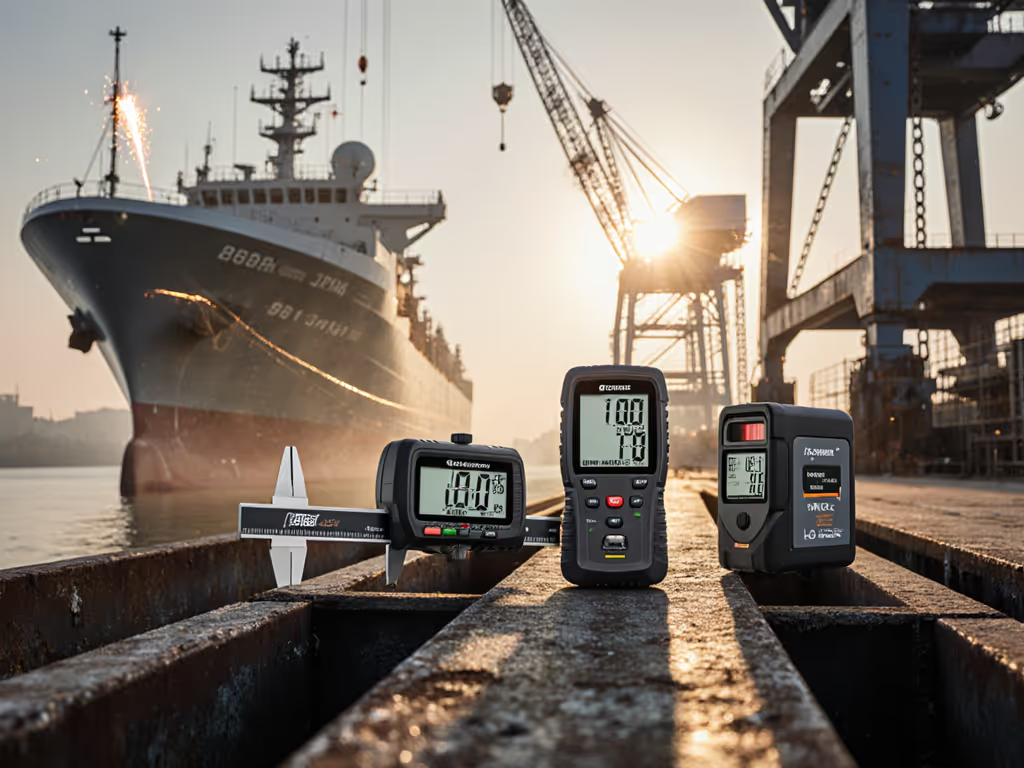
Most 'solar metrology' reviews ignore shop-floor realities. If you're weighing lab rigs against field gear, see our fixed vs portable metrology comparison. Based on 17 years of audit prep, here's what actually works:
Photovoltaic Measurement Systems for Cell Efficiency
Fluke I-V Tracer 3000EX (Editor's note: Product accuracy verified against NREL reference cell)
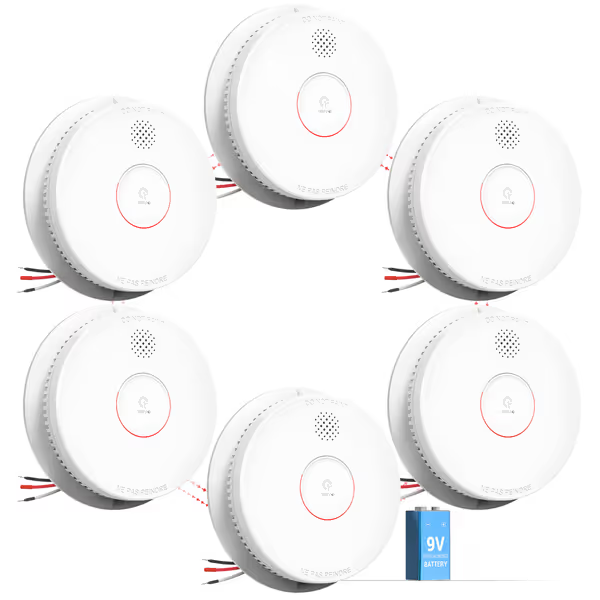
SITERWELL Hardwired Interconnected Smoke Detector (6-Pack)
Interconnected smoke alarms provide comprehensive, reliable home fire protection.
$100.79
InterconnectionUp to 12 units
InterconnectionUp to 12 units
Pros
All alarms sound when one detects smoke (85dB+).
Enhanced sensing quickly detects smoldering fires.
Cons
Sound level receives mixed customer reviews.
Wiring opinions are mixed; some note 3-wire support.
Customers find the smoke detector easy to install and appreciate its functionality, with one noting it works great as a replacement. The product receives positive feedback for its quality, value for money, and battery life, coming with a backup power source. Customers like its appearance, with one describing it as a sleek fire alarm. The sound level receives mixed reviews, with several customers reporting constant chirping, while opinions about the wiring are also mixed, with one customer noting it supports three-wire installations.
Customers find the smoke detector easy to install and appreciate its functionality, with one noting it works great as a replacement. The product receives positive feedback for its quality, value for money, and battery life, coming with a backup power source. Customers like its appearance, with one describing it as a sleek fire alarm. The sound level receives mixed reviews, with several customers reporting constant chirping, while opinions about the wiring are also mixed, with one customer noting it supports three-wire installations.
Why it passes audit scrutiny:
- CAT III 1500V rating meets IEC 61010 for high-voltage solar strings
- Built-in temperature compensation (±0.1°C accuracy) with traceable NIST certificate
- Uncertainty budget published including cable resistance effects (0.8% at 1500V DC)
Real-world limitation: Requires 15-minute warm-up for spec-grade accuracy. I mandate this in our SOPs, no 'quick checks' accepted during audits.
Solar Cell Manufacturing QC Tools
Sonel IRM-1 Solar Radiation Meter (for anti-reflective coating verification)
- Measures irradiance (W/m²) with ±2% uncertainty (NMI-traceable)
- Records panel/ambient temps simultaneously, critical for STC conversion
- Built-in recorder logs environment data alongside measurements (audit gold)
Audit tip: Document the time of shade-free measurements. Auditors now cross-check irradiance logs against weather archives. To streamline data capture and SPC, consider wireless measurement tools.
Precision Alignment Systems
Solmetric SunEye 210 (for solar panel alignment tools)
- Laser-guided tilt/azimuth measurement with ±0.1° accuracy
- Temperature-stable housing (-10°C to 50°C with <0.05°/°C drift)
- Calibration chain includes NIST-traceable angular standards
This tool stopped a $300k rework project when it caught 2.3° tracker misalignment during commissioning. Always recertify after transport, vibration shatters angular tolerances.
Where Most Teams Fail: The Hidden Uncertainty Budgets
Your tool's spec sheet lies by omission. Here's what to budget for beyond the manufacturer's claim:
| Error Source | Typical Impact | How We Budget It |
|---|---|---|
| Temperature drift | 0.2-1.5%/°C | Log ambient temp; apply correction |
| Operator technique | 3-8% in shading | Standardized training with video proof |
| Reference standard age | 0.5-2%/year | Track calibration interval drift |
| Spectral mismatch | 1-4% in cell testing | Use class AAA solar simulators |
Example: For silicon wafer thickness measurement with a laser micrometer:
- Manufacturer uncertainty: ±0.5μm
- Add: Thermal expansion error (0.7μm at 28°C)
- Add: Operator repeatability (0.3μm from GR&R study)
- Total budgeted uncertainty: ±1.5μm (not the advertised ±0.5μm)
This is why I always demand full GR&R studies in your environment, not the vendor's lab. If they refuse, their tool isn't audit-ready. For a refresher on systematic vs random sources, see our measurement error types guide.
Critical Gap: Lab Safety Systems as Metrology Infrastructure
Here's what no solar metrology guide mentions: your fire detection system is part of your traceability chain. During an AS9100 audit, the registrar demanded proof that our $200k reference cell wasn't exposed to smoke damage. We survived because:
- Smoke detectors were calibrated annually with NMI-traceable test smoke
- Battery backups were logged alongside environmental sensors
- Every unit had a unique asset ID in our calibration system
The SITERWELL Hardwired Interconnected Smoke Detector (GS562A) fills this niche for solar labs:
- UL217-10th listed with NMI-equivalent fire testing (15M lab replica)
- 10-year product life with documented drift stability (0.1%/year max sensitivity loss)
- Traceable calibration via test button (auditors verify 85dB sound pressure)
Why it matters for metrology: A single smoke incident can invalidate months of calibration data. Treat safety systems like measurement tools, document their traceability. Note: This isn't a metrology tool, but its absence creates audit risk.
Your Audit Survival Checklist
Implement this 30-day plan before your next audit:
- Traceability audit: For every critical measurement, verify the chain ends at an NMI (not just 'ISO 17025 accredited')
- Uncertainty budget: Publish error budgets including environment, operator, and tool drift
- Lab environment log: Record temperature/humidity alongside every measurement
- Safety system integration: Include smoke/fire detectors in calibration schedules
- Technique validation: Film technicians performing measurements; document GR&R
}
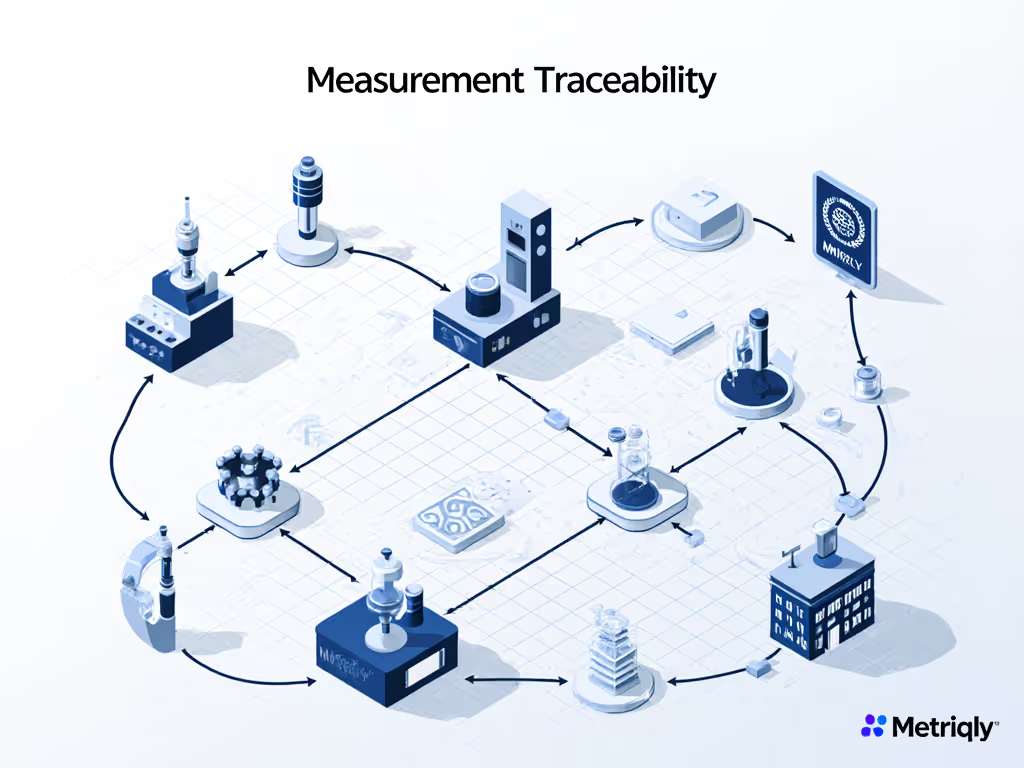
Last month, an auditor asked for the calibration chain behind our pyranometer's tilt sensor. We produced the full path: sensor → angular standard → NMI artifact, with uncertainty budgets at each step. His next question? 'How do you control lab temperature during calibration?' We showed the HVAC log. The audit closed in 4 hours, no findings.
Conclusion: Trust Through Transparency
Solar metrology isn't about owning the fanciest photovoltaic measurement systems, it's about proving their reliability when it counts. When you show your chain of traceability from silicon wafer thickness measurement to the national standard, you transform uncertainty into trust. Audit findings become rare events, not routine disruptions. And production teams gain confidence that every panel leaving your line meets its 25-year promise.
Remember: The best metrology doesn't just measure quality, it proves it.
Related Articles